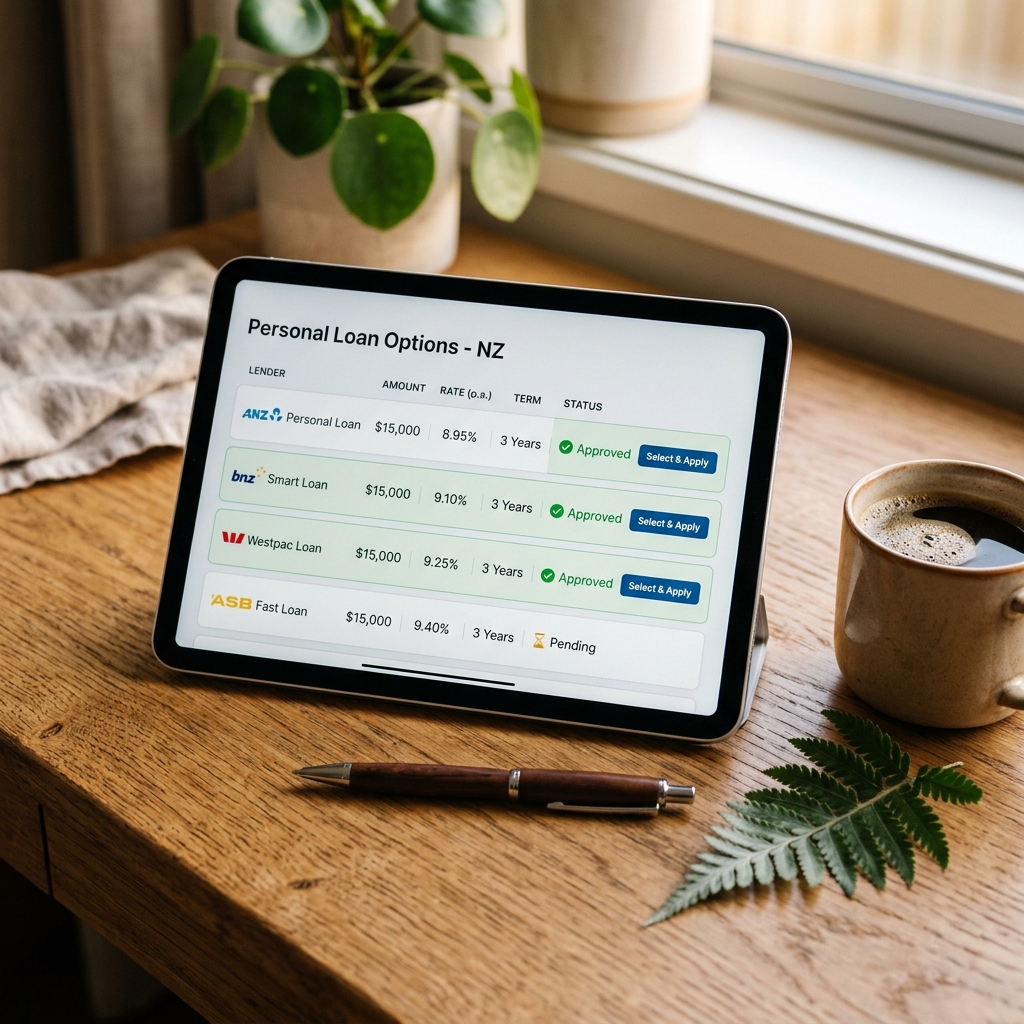
When you need access to funds quickly, a personal loan can be a practical solution. Whether you are planning a wedding, renovating your home, or consolidating debt, understanding how personal loans work in New Zealand is crucial. The interest rates charged vary wildly across different lenders, meaning the better your credit score and overall loan affordability, the better deal you will get.
This comprehensive guide will walk you through everything you need to know about personal loans, how to secure the best rates, and what alternatives might be more suitable for your financial situation.
What is a Personal Loan?
A personal loan is a specific amount of money you borrow from a lender, which you agree to pay back over a set period on a periodic basis. For example, you might borrow $5,000 and commit to repaying it every month for two years. In return for providing the funds, the lender charges you interest on the principal amount, alongside potential one-off establishment fees. You are responsible for repaying both the money you borrowed and the accumulated interest.
The primary advantage of a personal loan is immediate access to funds while spreading the repayment over a timeframe that suits your budget, whether that is weeks, months, or years. Personal loans are popular, relatively easy to obtain for those with good credit, and offer significant convenience for many New Zealanders.
Secured vs. Unsecured Personal Loans
When exploring personal loans, you will encounter two main types: secured and unsecured.
A secured loan requires you to provide an asset, such as a car or property, as collateral. Because the lender has a guarantee they can recover their money if you default, secured loans typically offer lower interest rates. Conversely, an unsecured loan does not require collateral. These are riskier for the lender, which usually results in higher interest rates and stricter approval criteria based heavily on your credit history.
How to Find the Best Personal Loan Rates
The average New Zealander overpays thousands of dollars on personal loans simply by not shopping around. The rate you lock in today determines how much you will pay every single week or month for the life of the loan. Therefore, comparing options is essential.
Top Lenders to Consider
While major banks often charge around 14% p.a. for personal loans, challenger lenders and credit unions frequently offer much more competitive rates, sometimes as low as 7% to 9% p.a.
- Harmoney: Known for its automated platform, Harmoney provides instant personalised rates without impacting your credit score. Their rates can start from as low as 7.99% p.a. for borrowers with excellent credit.
- First Credit Union: A great option for those looking to avoid extra costs, First Credit Union offers zero fees on personal loans up to $50,000, with competitive interest rates starting around 10.95% p.a.
- Simplify: If you are specifically looking for a car loan, brokers like Simplify negotiate wholesale rates with multiple lenders, often securing rates significantly lower than standard dealer finance.
The Cost of Not Comparing
Consider a typical example of a $20,000 loan over five years. If you accept a major bank's offer at 14% p.a., your monthly repayments would be approximately $465. However, if you secure a rate of 9% p.a. through a challenger lender, your repayments drop to $415 per month. That is a saving of $50 per month, adding up to $3,000 saved over the life of the loan.
Must-Know Personal Loan Facts
Before signing any loan agreement, it is vital to understand the full scope of what you are committing to. Borrowing is a serious decision that requires careful planning and budgeting.
Interest Rates and Fees
The advertised interest rate is rarely the only cost associated with a personal loan. You must also account for various fees that can inflate the total cost of borrowing.
- Establishment Fees: Many lenders charge a one-off fee to set up the loan, which can range from $0 to over $240.
- PPSR Fees: If the loan is secured, there may be a Personal Property Securities Register (PPSR) fee, usually around $10 to $25.
- Early Repayment Fees: Some lenders penalise you for paying off your loan faster than the agreed term. Always check if early repayment fees apply.
- Late Payment Fees: Missing a payment will not only incur penalty fees but will also negatively impact your credit score.
The Impact on Your Credit Score
Every time you apply for a loan, the lender performs a hard credit check, which is recorded on your credit file. Multiple applications in a short period can lower your credit score, making you appear desperate for credit to future lenders. Always use "soft check" or pre-approval tools where available to see your potential rate without affecting your credit history.
Alternatives to Personal Loans
A personal loan is not always the most cost-effective way to borrow money. Depending on the amount you need and the purpose of the funds, other options might save you money.
Credit Cards and Balance Transfers
For smaller amounts, typically between $5,000 and $7,500, a credit card might be a suitable alternative. If you can secure a 0% interest balance transfer deal, you can transfer the borrowed amount to the new card and pay it off interest-free during the promotional period. This strategy helps you avoid loan application fees and allows you to become debt-free faster, provided you clear the balance before the high standard interest rate kicks in.
Long-Term Finance Options
If you are taking out a loan for a specific retail purchase, such as furniture or appliances, providers like Q Card and GEM Visa often offer long-term financing at 0% interest with minimal upfront fees. However, it is crucial to pay off the balance within the interest-free period, as these cards carry high long-term interest rates that can become difficult to manage.
Overdrafts
An arranged overdraft on your everyday bank account can provide a flexible safety net for unexpected expenses. While overdraft interest rates can be high, you only pay interest on the amount you actually use, and for the exact number of days you are overdrawn. This can be cheaper than a personal loan if you only need the money for a short time.
Frequently Asked Questions
Can I get a personal loan with bad credit?
Getting a personal loan with a poor credit history is challenging and usually results in significantly higher interest rates. Lenders view bad credit as a higher risk. If you have bad credit, it is advisable to focus on improving your credit score before applying for new debt, or seek out specialist bad credit lenders, though you should be prepared for steep costs.
How long does it take to get approved?
The approval process varies by lender. Online lenders and challenger banks often provide instant pre-approvals and can fund the loan within 24 to 48 hours. Traditional banks may take a few days to process the application, especially if you are not an existing customer.
Should I use a personal loan to consolidate debt?
Debt consolidation can be a smart move if you can secure a personal loan with a lower interest rate than your existing debts (such as high-interest credit cards). It simplifies your finances into one manageable monthly payment. However, you must commit to not accumulating further debt on the cleared credit cards, otherwise, you risk worsening your financial situation.
Conclusion
Taking out a personal loan is a significant financial commitment that should not be rushed. Always assess whether borrowing is absolutely necessary and explore all available alternatives. If a personal loan is the right choice, invest the time to compare rates across multiple lenders. Avoiding the first offer you receive and shopping around for the lowest interest rate and minimal fees is the most effective way to cut the costs of borrowing and keep your finances healthy.